


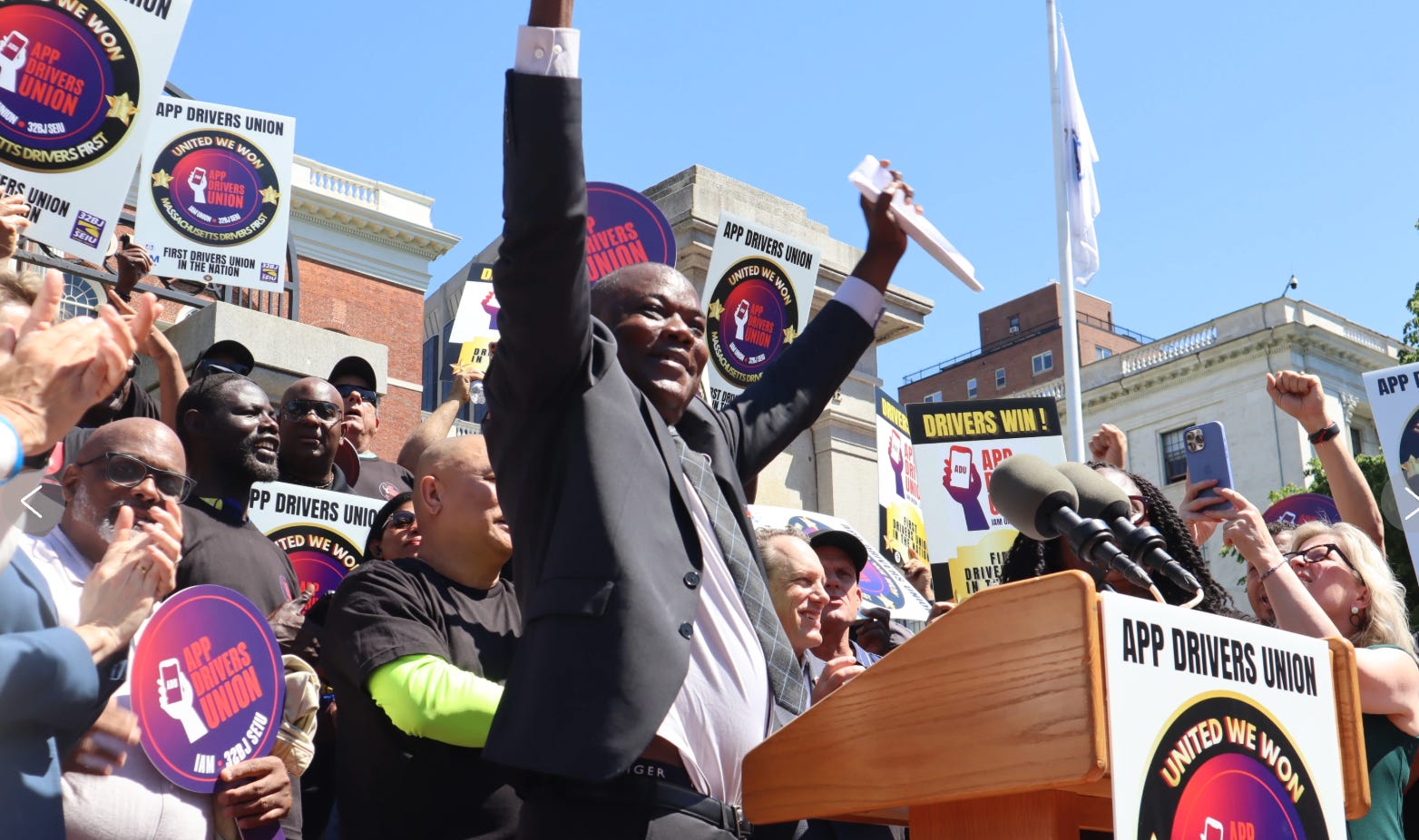
Earlier this week (May 26) the App Drivers Union (ADU) became the first rideshare union to win official recognition. According to the union, this creates a path toward negotiating better pay and job protections for the nearly 70,000 rideshare drivers in Massachusetts.
“I never dreamed that this day would happen. I once thought it was impossible that we would have a seat at the table with these two big corporations in front of us,” said Victoria Acosta, a member leader of the App Drivers Union. “But nothing is impossible when you are united. For me, it is a dream come true, seeing the hard work of all my colleagues collecting cards, talking to the drivers, and making sure we can achieve what we dream. It was worth it because now we have our union.”
Following union recognition, drivers with the ADU will begin contract negotiations with the rideshare companies where they will seek to raise standards around pay, safety and deactivations. In doing so, rideshare drivers will pave a path for millions of drivers across the country to join together, organize a union and win important protections on the job.
Massachusetts rideshare drivers won union rights through a ballot initiative in 2024. The law that passed mandates that rideshare companies bargain in good faith. If the two sides can’t reach an agreement, an independent arbitrator will join the process to make sure a contract is signed. This avoids the often protracted fights and barriers workers have to overcome to reach a first contract.
A Critical Organizing Breakthrough in the Gig Economy
Union recognition for Massachusetts rideshare drivers marks the most significant step forward for worker organizing in the gig economy. Securing the first collective bargaining agreement in the rideshare industry gives rideshare drivers real power to tackle unpredictable pay, unfair deactivations and other issues.
“This victory belongs to the drivers who spent years organizing in airport parking lots, community centers, places of worship and neighborhoods across Massachusetts to build power from the ground up,” said Mike Vartabedian, App Drivers Union Principal Officer and IAM District 15 Assistant Directing Business Representative. “Drivers are standing together for better pay, protection from unfair deactivations, transparency around algorithms, safer working conditions and dignity on the job. For too long, rideshare corporations made billions while drivers had little voice over the conditions they face every day. What’s happening in Massachusetts is a model for app-based workers everywhere who are ready to organize, demand respect and win a seat at the table.”
“This is one of the biggest organizing victories for labor unions in the last century. Big Tech spent years taking from drivers and writing the rules. Today, 70,000 Massachusetts rideshare drivers won because they wrote our own rules and won the union. Now, for the first time, the app companies have to listen to the workers who make them their money,” said Autumn Weintraub, executive director of the App Drivers Union. “This is not just a victory for rideshare drivers, but a warning shot to every Big Tech billionaire: working people are united and are willing to fight for more.”
“Today, we welcome, with open arms, 70,000 Massachusetts rideshare drivers who know a better future is possible when working people build power through unions,” said Liz Shuler, President of the AFL–CIO. “The App Drivers Union’s victory is a reminder that the billion-dollar rideshare industry is fueled by worker power, not corporate greed. These drivers prove what we’ve always known: when working people unite, we win.”
The California Gig Workers Union
Earlier this month, rideshare drivers in California came one step closer to establishing a union. Their union, the California Gig Workers Union, had received support from over 10 percent of active drivers in the state, crossing an important threshold and kickstarting a process similar to Massachusetts.
Now, drivers in Massachusetts, California, Illinois, Minnesota and beyond are seizing their opportunity to build a more equitable rideshare industry where they have the ability to negotiate stronger standards around pay, safety and benefits. Their fight is a step towards a brighter future where all working people have dignity and the power to organize a union.
So why not in Maryland and the DMV region?